Sunday, November 23, 2014

Go Wide!

The college football season is rapidly approaching the end of the regular season and the beginning of the bowls.   Going wide is something we'll hear when talking about football wideouts and wide receivers. Maybe we'll hear it this Saturday in the Florida - Florida State game, but I'm afraid the passing will favor the Seminoles this year.

We can also go wide in photography.   A wide angle lens is typically in the 24mm - 36mm range with ultra-wide having shorter focal lengths and standard or normal lenses having longer focal lengths.  The are called wide angle because the angle of view through the lens takes in so much more.  A 28mm lens has a 75 degree angle of view, while a 135 mm has only an 18 degree view.


The typical way to use a wide angle is to capture a big wide landscape scene.

Shaker Village

Reel Foot Lake 
Both the Shaker Villiage and Reel Foot Lake photos were taken at 17mm.   They take in a lot of the scene from the far left to the far right.   This is a perfect use for a wide angle lens, but not the only use.

When you place objects close to a wide angle lens their size is magnified relative to objects that are further away, like in this photo of the Cable Mill in Cades Cove.
Cable Mill @ 24mm
What if you turned your camera and took a portrait (taller) orientation shot?   Same effect - things that are close appear much bigger.

22mm
In the photo to the left the white flower is the obvious subject.  It is bright and big, demanding attention.   The purple flowers in the background are hardly noticeable, but they do add some depth to the photo.

I've found this is a fun way to get close up shots but include the environment around the subject in the photo.   Wide angle lenses also tend to have a much deeper depth of field, making it easier to keep the close subject and far background in focus.
21mm


17mm


I've used this technique with flowers to draw people's attention to the flower.  You can use the same technique on other subjects, but beware.  If you use a wide angle lens to photograph a person up close you can get a photo with a large nose or ears.  Not too flattering.

Next time you're out try turning your camera into the portrait orientation and going wide!

Monday, November 17, 2014

Stop, Look and Listen

I may not remember much about growing up, but I do remember - "Stop, Look, Listen!"   We were taught to do this before even thinking about crossing a road.  Look to the left and to the right, and listen for approaching vehicles. It was so ingrained in the minds of our generation that it The Stylistics released a soul song by that title in 1971, followed up by Marvin Gaye and Diana Ross in 1974.

It's a good think to remember in photography as well.   Those of us who are nature or landscape photographers can easily fall into the trap of getting to a place and shooting the first thing that looks good to us, then moving on. I call this the shoot and go approach.  It's easy to do, but we miss the great shots by not stopping and looking around.   The first shot we make is most often not the best one.  There are always other angles, other compositions, and other subjects in an area.  Each one can tell a different story.

Here's two examples.   The first shot shows two  Adirondack Chairs under a tree. What' kind of story does this tell?  The leaves n the gree and the grass are still green, but there are brown leaves on the ground under the tree.  It's early fall.  The chairs are inviting under the shade.   Just imagine yourself with your favorite person you enjoy being with sitting in those chairs on a cool fall day listening to birds and watching horses run in the near by pasture.  Sound like a good place to be?   


A photo is more interesting to the viewer if they can imagine themselves in the photo.  It creates a sense of connection.   Can you imagine yourself there?

This was just outside the room where we were staying at Shaker Village in Kentucky.  It was an obvious photo for me, but not the only shot.   Notice the two leaves on the chair on the right?  There was a photo in there as well.


Taken at the same place and the same time of day, this second photo tells a completely different story.  The subject is no longer the chair, lawn, or trees.  You can't even see those things in this composition.  The subject is the dried leaf stuck in the slats.  The first photo had a lot of green and only a little yellow or brown, this photo is almost entirely brown.  To me it is a story of the end of life for the leaf.   Same place, different story.

I could have stayed in a 20 foot circle for an hour taking different pictures of leaves, grass, chairs, and tree trunks.   What possibilities do you see in these photos?

Here's a suggestion for avoiding the shoot and go approach and slowing down to look for photos beyond the obvious.  When you get to a place just stand or sit for a while and take it all in.  Walk around a little and enjoy what God has made.   Don't even try to make a photo until after you have had time to stop, look and listen.   You'll find many more photographic opportunities right in front of you.
  

Saturday, November 8, 2014

Giving Thanksgiving for Blessings

Just a couple more weeks and we will be celebrating Thanksgiving in the US and Canada.   The photo for November is probably the most recognized symbols for Thanksgiving.  

This was actually taken in the month of April in Cades Cove in the Great Smoky Mountains National Park.   The Tom was trying his best to impress the ladies.  He would run around to get in front of them, puff up, spread his tail feathers and do his best to get their attention.  There were several hens and none were giving him the time of day.
Look At Me
I took 50 shots of the turkeys that day.  I started out standing on one side of the road and I used my 80-400 mm zoom lens to get in as close as possible.   After they crossed the road I noticed another photographer taking photos while laying in the grass.  At first I thought that the grass was way too wet and cold to do that but after some encouragement from June I was out there with the turkeys and flat on my stomach.  I'm glad I did.   It wasn't that cold and I eventually dried out. The calendar photo was taken in this position.   Getting down to the animal's level makes for a more interesting photo.  Because I was less threatening laying down it allowed me to get closer.

For many Thanksgiving is a time to gather for family, football and feasting.   Originally  a day of giving thanks for the blessing of the harvest and of the preceding year, for many Thanksgiving has turned into a time to over eat and prepare to go shopping on Black Friday.   John F. Kennedy said “To those whom much is given, much is expected.”, which is taken from Luke 12:48 - "From everyone who has been given much, much will be demanded; and from the one who has been entrusted with much, much more will be asked."  (NIV).  As we give thanks on November 27, it's a time to reflect on our blessings and think about how we can use those blessings to bless others.

If you enjoy these posts you may want to purchase on of my 2015 calendars.  All the proceeds go to Hope Haven Ministries in Kingsport.   It's one small way to bless others.

Tuesday, November 4, 2014

The Importance of a Good Education

"An investment in knowledge pays the best interest."

- Benjamin Franklin

Last night I attended a photography seminar by one of the premier landscape photographers in the world today.   For the paltry sum of $7 (normally $25 but I found this great coupon) I got 2+ hours of instruction in Composition, Technique & Impact by Art Wolfe from the comfort of my den on my big screen TV.   This is by far one of the best investments I have made in my photography.

Preparing
Hot Air Balloon Ride 2014


Lemons
I always encourage people to invest in education as the best way to improve their photographs.   No lens or camera will make as big a difference as time spent with a quality instructor, taking an online course or participating in a photography group.  I've been in several photography workshops and sat through many webinars on photography.  I really enjoyed last night's session with Art Wolfe.  He spent the first hour or so talking about some techniques he uses to create compelling compositions.  The entire time he was showing his own photos as examples of each technique.  Just seeing his photos was worth the price.   The second half was a critique session.  Participants were able to submit some of their photos ahead of time and Art picked several to discuss.   With most of them he spent a minute or so showing what could be done with some creative cropping, exposure adjustments, and color balancing.   I found myself saying "wow, that really made a big difference".   In the last 20 minutes he answered a few questions that had been submitted online.

This was the first time Art did a live Webinar.  His next one is on  light, color and how to get more emotional impact out of your photographs.  Hop on over to http://www.photographywebinars.com/ and sign up to get notified when it is scheduled.   

Do you want to learn more about Adobe Lightroom?  Kent Ervin and I are planning to do a Lightroom class this winter in Kingsport, TN.  More information will be available in the next month or two.

Tuesday, October 28, 2014

What Makes A Good Photographer?

On October 11 there were photographers of all skill levels with all kinds of photo gear wandering the streets of Jonesborough Tennessee for the Scott Kelby Worldwide Photowalk.
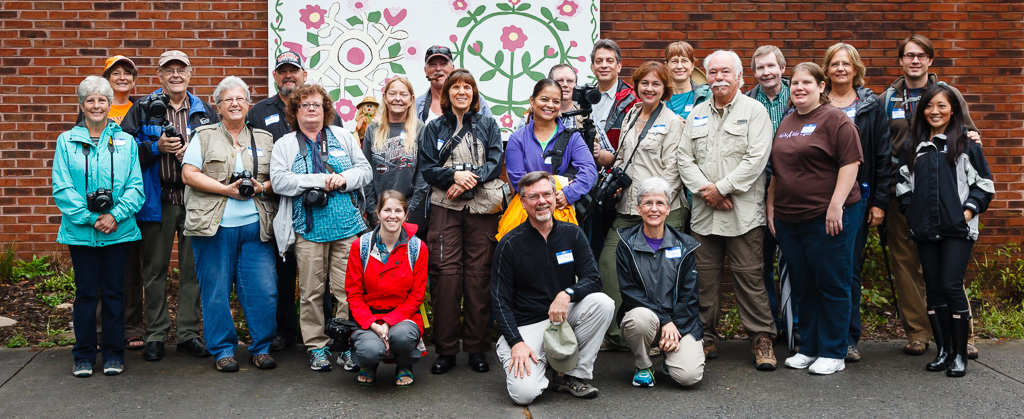
Some of the Photowalk Crew
There were Nikons, Canons, Sonys and other brands represented.  Some of these were pretty nice cameras.  There were also many excellent photographers.

The photo below is not mine.  It was taken on the photowalk in Jonesborough by one of the photographers/walkers in the photo above.  Each of the photographers who participated in the walk could pick their favorite photo and submit it to be judged against all the other favorites from that day.  The photographer with the best photo won a full year membership to Kelby One online training (a $249.00 value). That's a pretty nice prize.  As the walk leader I had to choose what I thought was the best photo of the day.  This is never an easy task because they are all good and each one is different.  This year I picked a red leaf in water as the best photo.
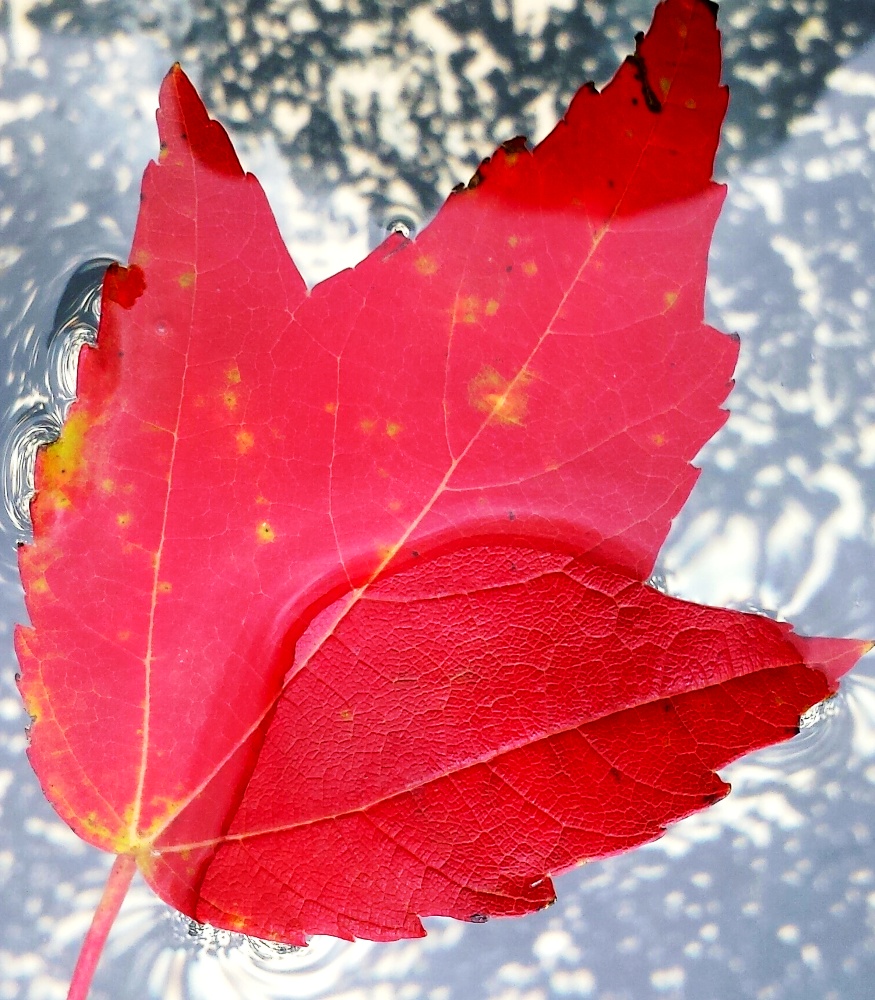
Leaf in Water Fountain - Prize Winner


So what makes this a good photo?  Of course, there is a lot of subjectivity in picking a photo.   What I like may not do anything for you.  The thing is, photography is art and everyone has different things they like and appreciate in art.  Here's some things I thought this one had going for it.

Color and color contrast - red is a powerful color and one that people's eyes are naturally attracted to.  This photo has a strong dominate red but also has a slightly blue tint in the background, creating a nice color contrast between the red and blue.

Angle - the fact that the photographer thought to angle the camera so the leaf points at an angle makes this a more dynamic photo.  If the leaf had been vertical, horizontal or placed in the center of the frame it would have felt static and uninteresting.

No distracting elements - simple, just a leaf in water.  There are no other things, such as twigs or other leafs, in the photo.   Generally the simpler the photo the better.

Sharpness - the eye is drawn to the sharp parts of a photo and the part of the leaf that is out of the water is nice and sharp.  You can see the interesting texture in that part of the leaf.  That part of the leaf is also placed at one of the power point intersections created by dividing the photo into three vertical and horizontal sections (rule of thirds).

Besides the composition of this photo, I like the fact that the photographer found this.  An eye for seeing photos before taking them is a skill that not everyone has.   My wife June has a good eye for photos, which is why my photos are always better when she comes along with me.

Some of you may be thinking that this is not a perfect photo, and you're right.   The top of the leaf was cut off and there is a circular shadow in the top, maybe from the photographer.  The thing is there is no perfect photo.  In my opinion, this is a very good photo.   I wish I had taken it.

So a good photo is made by a photographer with a good eye who can create an interesting composition.  What about photo gear?   What kind of camera was used?   In photography circles there is always some friendly jabs between the Canon and Nikon shooters.  Lately, there have been some Sony and Fuji shooters showing up to claim the top gear of the year/month/day award.   What about this one?

Because of the info embedded in the digital photo I was able to look up some interesting facts about the photo.  It was taken with a shutter speed of 1/145 second, at ISO of 50, and an f-stop of 2.2.  This was taken with a 13 mega pixel model SCH-1545 digital camera.  Not familiar with that one?  Click here for info on the camera.  That's right, it was taken with a cell phone!

Now, I'm not suggesting we all go out and trade our cameras in on cell phones.  I am saying the most important piece of photography gear you can have is not the hardware you hold up to your eye.  It's what's behind your eyes that makes a good photographer.   Photography is all about light, seeing, and knowing how to compose a photo in such a way that it is pleasing to view.  The good news is you can easily upgrade your photographic mind by taking classes, workshops, online training or just hanging out with other photographers.   Being with other photographers and practicing are the two best investments you can make.

Sunday, October 19, 2014

Photo Manipulation

Tom Branch Falls
Today I took a hike down along the trails in the Deep Creek area of the Smokies with a good friend and Best Man from our wedding .   It's a place I've only been one other time and the first time I've been there in the fall.   The colors in the southern Smokies around Bryson City, NC were more muted and a little behind where they are on the north and western slopes this year.

As you can see from the photo of Tom Branch Falls, there was still a lot of green in the trees.  We didn't see a lot of golds or reds.  A few more cold nights and sunny days are sure to bring out those colors.

Even when we don't get the colors, light, or other conditions we are hoping for, there are always other ways to manipulate the photo.

I'm not talking about editing the photo and changing the green leaves to gold.  I'm talking about using compositions  that manipulate what the photo says.

Juney Whank Falls


The Park Service has built a nice bridge right next to Juney Whank Falls that allows the hiker or photographer to get close to the falls.  The yellow and red leaves stuck to the rock face caught my attention. Instead of taking a picture of the entire falls, I chose to zoom in on a small section with those leaves and some white water.  I think this photo has an autumn feel with the little color that there is.


Another opportunity to manipulate the mood through composition is the picture of this small rock in a stream.
Streams of Gold
I got this color by getting down low on the edge of the creek and getting in the right position to get the reflections I wanted.  In this case the reflections in the stream were of trees on the opposite bank that were lit by the early morning sunlight, giving it a golden tint.

No need to manipulate a photo in software.  You can change the story the photo tells by paying trying compositions that are different from the obvious, getting the right angle, paying attention to the light and getting a bit creative.  

Wednesday, October 1, 2014

Trust in the LORD with all your heart.

The photo for October on my 2014 calendar is from Unaka Mountain Road in the Cherokee National Forest and Unicoi County in Tennessee.  This 12 mile long road windes its way over and around the mountain.   According to Encylopedia Briticanica the Cherokee Indians named the mountains Unaka (“White”), probably in reference to a persistent white haze or to some white rock formations.

On this day the colors were anything but white.   Fall was ablaze with warm yellows, oranges, and red interspersed with some green leaves trying to hang on for a few more days.  You can tell by the leaves on the road that the fall days were growing short and soon the mountain would again be white with the first snows of winter.

I used one of the most powerful shapes in my composition.  The s-curve is a great graphic element that adds interest and pulls the viewer into the photo.  In this case I had the road start in a corner and avoided putting it dead center in my photo, which is a sure way to create a photographic dud in landscape photography.   One thing I wish I had tried was to climb on top of the car, which would give me a better view of the s-curve.  I always come up with great ideas for improving a photo long after I took it.  I guess that's the way I learn.  It sure takes a long time that way.

Exchange Place

The small photo on the calendar page was taken just a few miles from our house at Exchange Place.   It is a great place to wander around and shoot, particularly in the fall.  On this day I had to place to myself and spent a couple hours wandering around and poking my head in any open building looking for a photo that would tell the story of Exchange Place in the Fall.

Once you're on Unaka Mountain Road you have very few decisions to make.  There are only a handful of short side roads, but they all lead to dead ends.  You either have to continue to the end or turn around and go back.  It makes navigating the mountain easy.

Life is not always so simple.  Every day we are faced with multiple decisions that have to be made.  Some are small, yet others are significant and can have a major life impact.  We find ourselves struggling to gather information, study all the angles, and make our decision.   That's the hard way.  If we listen to Solomon's wisdom, don't try to figure it all out on our own, but trust the Lord  he will show us which path to take.   We don't have to know it all.  We have someone on our side who already knows it all and will show us the way to go.  All we have to do is listen and trust.

It's time to be thinking about a calendar for 2015.  I've place an order for the first batch of 2015 calendars.  If you want one just drop me an email to r.siggins@charter.net.   They're only $15, all the profit goes to Hope Haven Ministries, and I'll even ship to you.