Over the years I have gathered quite a collection of cameras and lenses. So much so that when June decided to try her hand with an interchangeable lens camera I was able to give her a mirrorless camera and three lenses. This is my backup camera and three lenses that I no longer use but never got around to selling. Not counting the three lenses I gave June, I have six lenses covering focal lengths from 12mm to 400mm (18-600mm in full-frame terms). Because I use a cropped sensor mirrorless camera system I can easily carry all those lenses in a single backpack. I pretty much have unlimited flexibility with which to create my photos. I found this flexibility was putting me into a creative rut. I was relying on my collection of lenses to come up with a good composition.
Don't misunderstand -- each of those lenses serves a different purpose, from fast wide 12mm lens for night sky photos to the 100-400mm zoom for wildlife photography. Sometimes I would use a lens that is typically not used for a given style of photography, such as using the 100-400mm zoom for landscapes, but most of the time I was relying on a zoom lens to compose the photo without making other efforts to be creative.
Recently we took a couple trips to Knoxville Tennessee, Michigan, and Indiana. For a couple outings on those trips, I took only one lens - a 35mm f/2 prime (no zooming) lens for my Fuji XT-3 mirrorless camera. I recently added this lens to my collection because the 35mm focal length is close what our eyes see (normal lens) and the wide f/2 maximum aperture allows me to shoot in low light conditions and to blur the background in my photos. It's a tiny little lightweight lens on a small mirrorless camera that doesn't attract much attention or weigh much at all. I can carry it all day long and no one pays much attention to the little camera and lens.
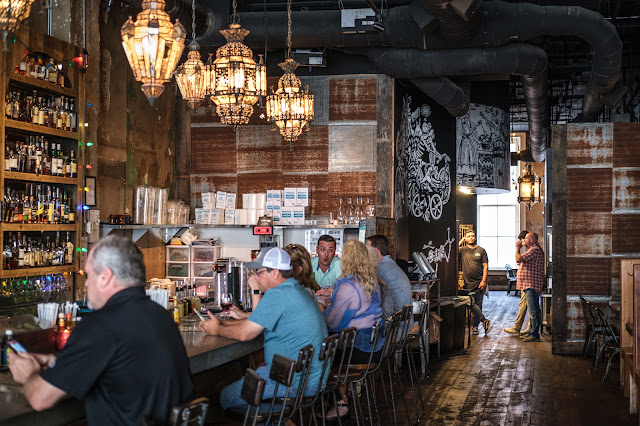 |
| f/2 at 1/50 sec, ISO 800 |
By limiting myself to a single focal length I had to compensate by moving around to get a good composition. The wide f/2 aperture allowed me to shoot in dark places I couldn't with other lenses, such as the bar, but at the same time, I had to think about creatively using the depth of field.
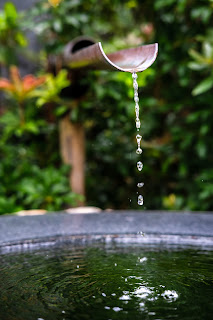 |
| f/4, 1/1600 sec, ISO 4000 |
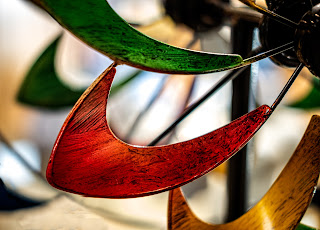 |
| f/2, 1/10 sec, ISO 400 |
I found myself having to look around and find new perspectives. While waiting outside a gift shop, I found a whirlygig that had some cool shapes. I could use the f/2 aperture to blur out any distracting elements in the background. I focused on water dripping from a pipe. I found a single yellow petal from a Sunflower in a bed of red leaves (I didn't put it there, this time.)
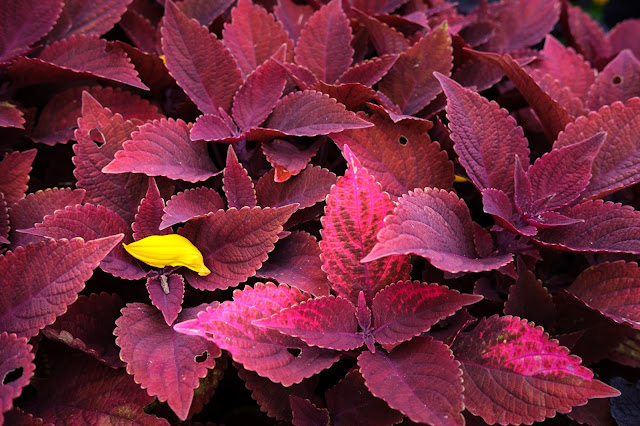 |
| f 5.6, 1/90 sec, ISO 320 |
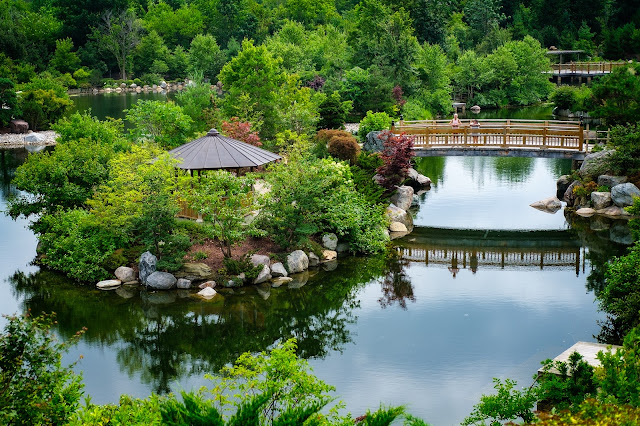 |
| f/2.8, 1/2000 sec, ISO 200 |
Sometimes the 35mm focal length worked out, such as the bridge photo. Other times I had to work to create a pleasing composition because of physical barriers that kept me from being able to stand where I wanted, such as the boat and lily pad flower and the red/orange flowers where I had to cut off the left petal.
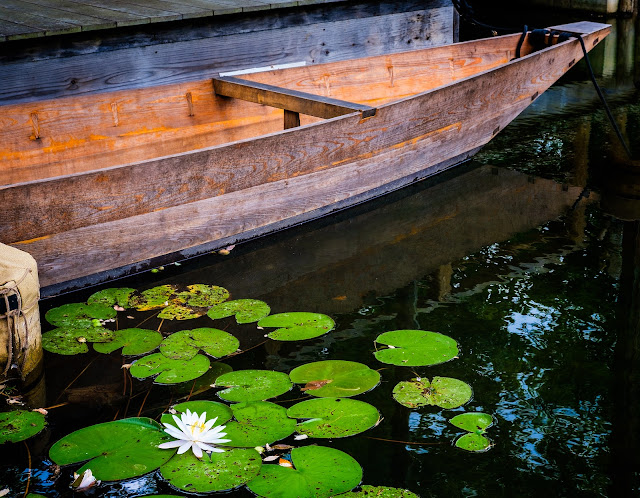 |
| f/7.1, 1/100 sec, ISO 200 |
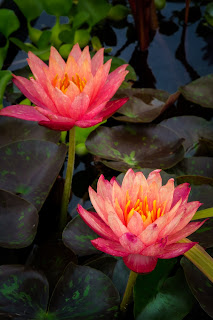 |
| f/16, 1/120 sec, ISO 640 |
I found that I enjoyed my single-lens outings and found some creative photos that I might have missed if I had relied on my arsenal of lenses. My new photos don't look like the thousands I have already taken. By restricting one area, I have opened up my creativity and made photography fun.
Give this a try. You don't have to restrict yourself to a single fixed focal length lens. Restrict yourself in other ways -- only make photos that contain a specific color. Only do portrait orientation photos. Limit yourself to a specific aperture or shutter speed setting. You might find you have more fun while learning to be more creative.
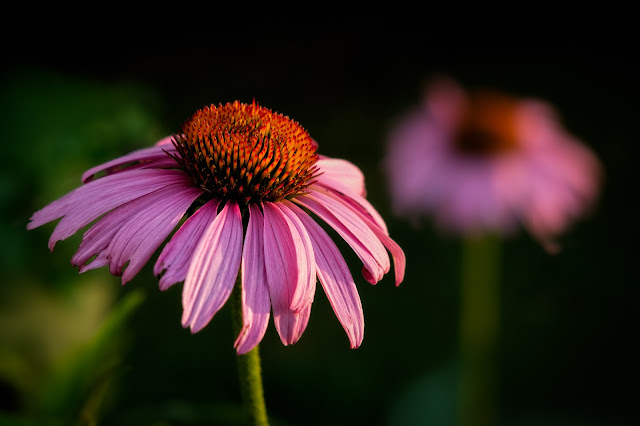
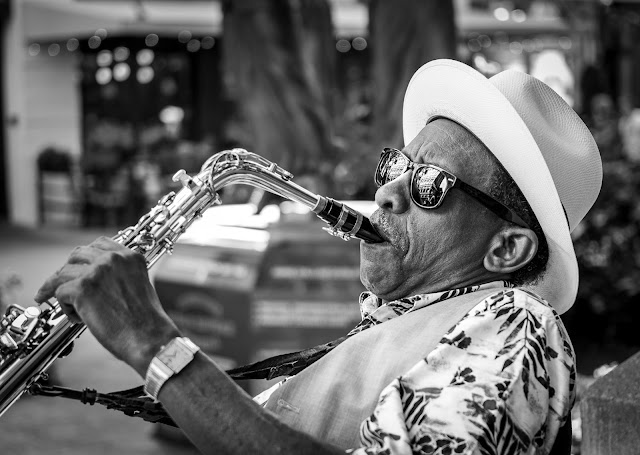
Here are a few more photos from those single-lens days.
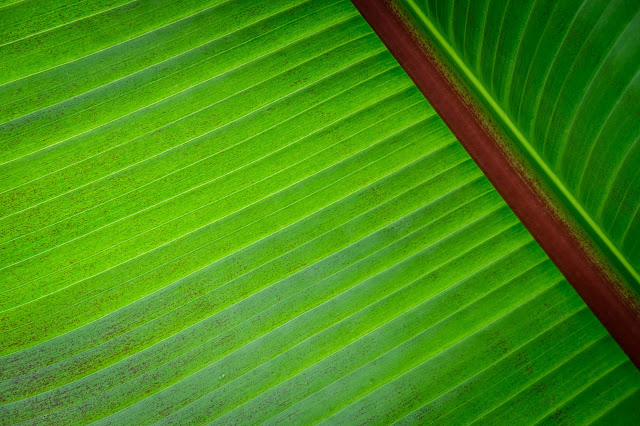 |
| f/5.6, 1/105 sec, ISO 400 |
 |
| f/5, 1/150 sec, ISO 200 |
 |
| f/2, 1/125 sec, ISO 160 |
 |
| f/2, 1/50 sec, ISO 1000 |
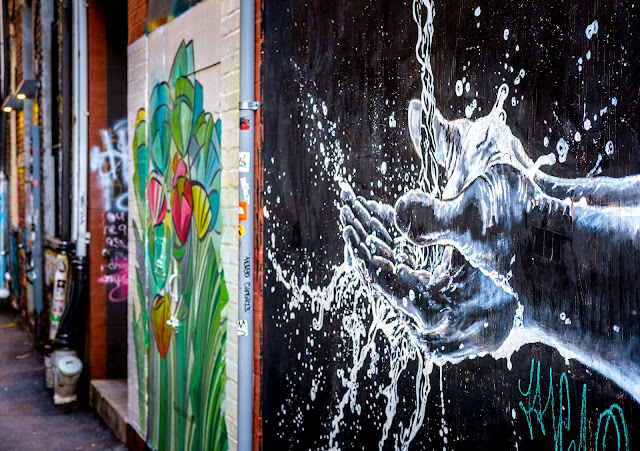 |
| f/4, 1/45 sec, ISO 160 |


