Showing posts with label outdoor photography. Show all posts

Friday, March 20, 2020

More Time On My Hands = More Photo Tips

We are all living under conditions that are extremely different from just a few weeks ago. Half the sessions in my Photography Class were canceled, and places I frequent on a regular basis, such as the gym, are closed.  I'm spending more time walking but today it's raining so I'm spending my day indoors.  That means I have time to invest in things I've been neglecting, such as blogging, updating my website, and editing photos in my archive.

I feel bad that I wasn't able to finish my last photography class.  I promised to finish it when things return to normal, but I'm not sure when that will be.  So instead, I'm going to share much of what is in my class here in my blog.  Here's the first installment...
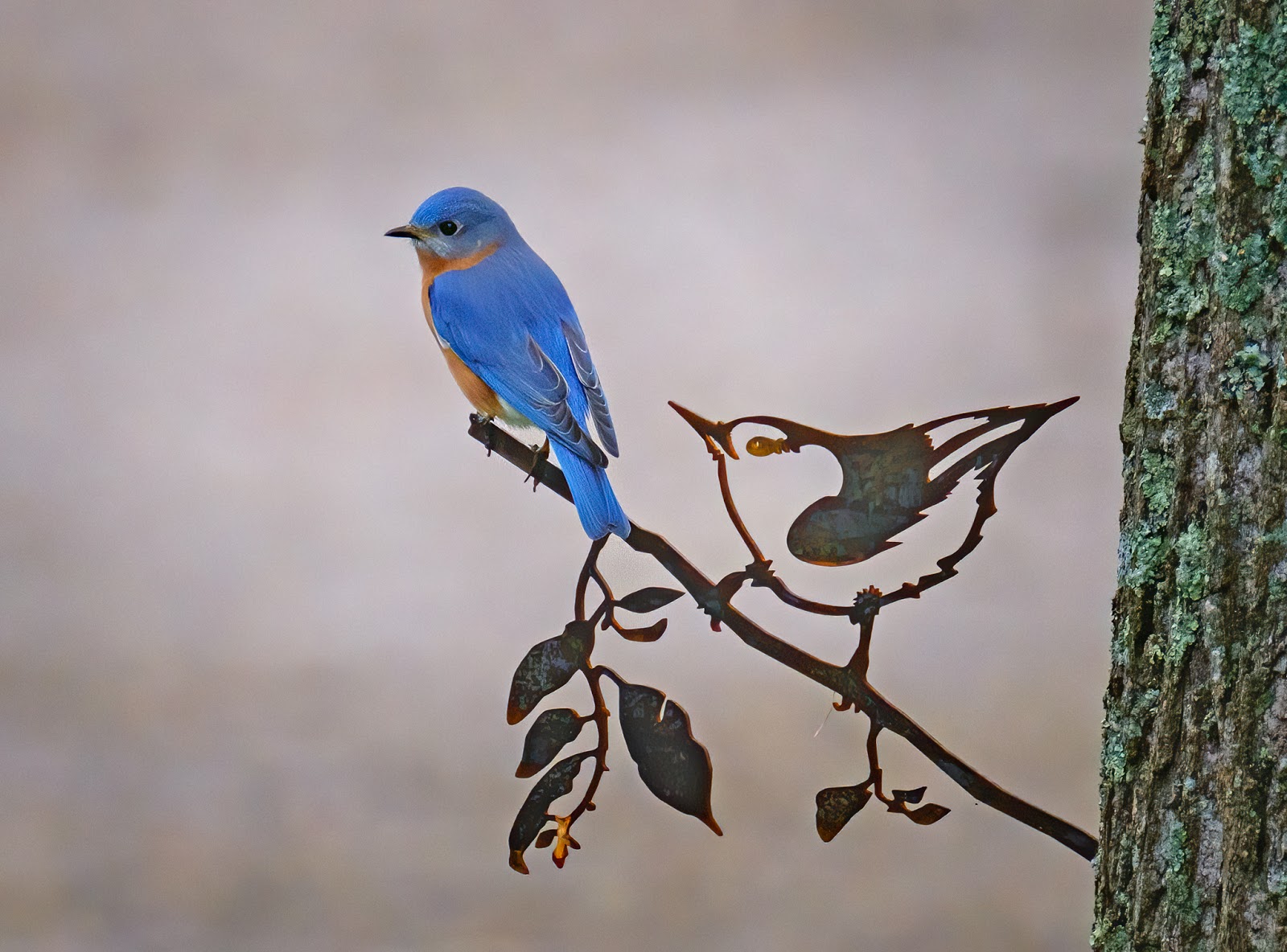
Bluebird on a yard decoration
Yesterday was the first day of spring.  Flowers are coming up and the birds are busy.  Lately, we have noticed a pair of Bluebirds in our front yard each morning.  Today I opened the window and got my camera and long zoom lens out to see if I could get a shot or two.  They didn't cooperate as much as I hoped, but they did give me material for today's photo tip.

When composing a photo it is important to pay attention to the background.  Watch out for things that will take away some of the beauty of the photo.  In this case, our neighbor's camper was in the background behind the male Bluebird.

Bluebird With Camper

I was shooting at a wider aperture (f/5.6) and zoomed in to 400mm, which blurred the background a little.  You can still see the white of the camper.  It looks unnatural and not exactly what I wanted. 

By getting a little lower I was able to shoot over the camper and include the green yard instead.  All I had to do was do a few deep knee bends.


No Camper!
This is a simple little example to illustrate the tip:

  1. Check the background when composing your shot
  2. If there is something that will distract from your photo try to remove it by moving to a different spot, either side to side or up and down. 
  3. This tip applies to all styles of photography.
  4. Now, make this a habit by shooting as much as possible.
Outdoor nature and wildlife photography can be fun and is a great way to destress.  Look for opportunities to make some photos, while staying "socially distant".

Tuesday, July 2, 2013

Oh, the Places You'll Go!


You have brains in your head. You have feet in your shoes. You can steer yourself any direction you choose. You're on your own. And you know what you know. And YOU are the one who'll decide where to go...”
Dr. Seuss, Oh, the Places You'll Go!
 
The sage wisdom of Dr. Seuss can be applied to outdoor photographers.   We will go places and do things that may seem absurd to most people.  We go in directions that normal people would just shake their heads in wonder if we really "have brains in our head". While on vacation, June and I will get up an hour or two before sunrise, stay out until well after sunset and go hard all day long.   When doing that in the Pacific Northwest in June sunrise is before 5 AM and sunset is after 9 PM, which makes for a very long day.  Between those hours an outdoor photographer will spend hours in one spot sometimes photographing the same subject and other times just sitting and waiting for the light to change.  These extended times in one place can be separated by a mad dash to get to the next spot at just the right time.  On an easy day we might go back to the hotel and sleep for a couple hours in the middle of the day.  After a couple days of this we might take our nap just about anywhere like my friend Chuck Barnes.
Chuck Recharging
 
 
I am blessed to have a wife who is willing to put up with my craziness.  Not everyone is as lucky as I am.
 
When we get to the places we have decided to go that day we may do things that make people wonder what made us "decide where to go".  One example of our craziness is what I consider the best way to photograph a waterfall -- standing in the creek or river below the falls, often with the camera a few inches off the surface of the water.  Sometimes this water is spring snow melt, making it not too many degrees above freezing.   By getting to places at the right time and getting into the best place for a shot we can come away with interesting compositions, such as this one of Bridal Veil Falls in the Columbia River Gorge.

Bridal Veil Falls

 I took this at the end of the day when we were both pretty tired but the light was good for shooting waterfalls so off we went.

Shooting Munra Falls
Earlier in the afternoon we had seen this guy taking photos at Munra Falls.  We ran into him at Bridal Veil Falls as well.  He was younger and had more energy than I had left and was climbing over boulders and through the stream to get the best shot.

I'm hoping to hike to some falls in Virginia  this Thursday morning with a photographer friend.   If we're lucky, it will be foggy and raining.  The best conditions for taking photos of waterfalls, streams and forests.   Oh the places we will go!


Sunday, September 23, 2012

Joy

In early September I had the privilege to get to spend 13 days on a trip to Glacier National Park in Montana and Waterton Lakes National Park in Alberta with my wife June.   We were blessed with safe travels and good weather as we checked off one more place on our bucket list.   It was a time of relaxing, refreshing, and recharging.

I've got a lot of images from this trip and it's taking me a while to work through them.   When I finish I'll post my favorites in a new gallery on my website.  For now, I'd like to share one from one evening in the Many Glacier area of Glacier National Park.


This row boat is on the shore of Lake Josephine not far from the Many Glacier Hotel.  We had stopped to photograph it around 9:30 on our way up the Grinnell Glacier Trail.  At that time the sun was behind me and the light was OK, but not very dramatic.  By the time we made it back down to this point it was 5:30 in the afternoon and the light had completely changed.   Instead of a low contrast uninteresting photo I now had fantastic warm afternoon light including God Beams coming out of the clouds and reaching across the frame to the other side.  What a gift!

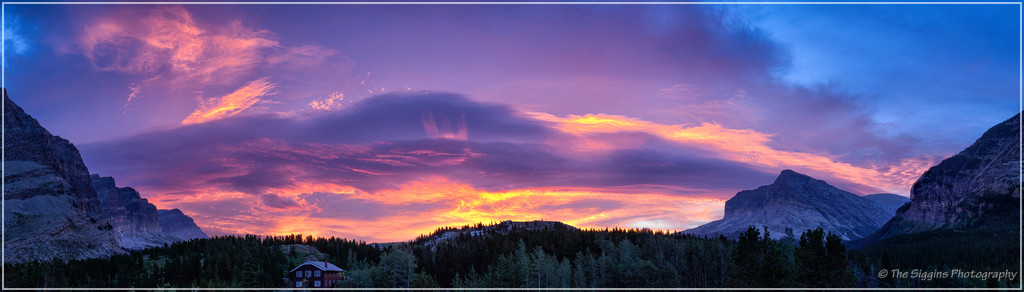
The name of the boat pretty much sums up that day in Glacier.  We had woken up to a fantastic sunrise right outside our hotel and I was given enough time to set up to take nine shots to stitch together to create this panorama.   After a big breakfast we had one of our best hikes of the trip up to Grinnell Glacier.  The best part was I was able to share it with June.


As joyful as this day was it pales in comparison to the joy of being forgiven through the sacrifice of Jesus.   The word joy occurs 217 times in the Bible and this joy is available to all.  What a blessing!  I'll leave you with Paul's words.

May the God of hope fill you with all joy and peace as you trust in him, so that you may overflow with hope by the power of the Holy Spirit. - Romans 15:13

Sunday, August 12, 2012

We Just Think We Have A Plan

The forecast for this past Saturday was for clearing skies and less humidity.  My friend and photographer buddy Jim Rigsby and I decided we were going to head to the mountains to take pictures of the sunrise.  We made plans to meet at 5 AM and drive up to Beauty Spot in Unicoi County TN.  Beauty Spot is one of the high mountain grassy balds similar to Roan Mountain and Max Patch.  At 4,400 feet above sea level we expected to see a great sunrise with some patchy clouds.  By 5 AM we were on the road and executing our plan.

On the way we noticed you could not see any stars in the sky.  A little while later it started to sprinkle, then rain, then we saw lightning ahead.   By the time we hit Johnson City it was raining hard and when we got to Unicoi it was still raining, maybe even harder.   Being outdoor photographers with nothing else to do at 5:30 AM on a Saturday we kept going.  When we started up Unaka Mountain Road it had gotten so foggy it was difficult to see to drive up the single lane dirt road to Beauty Spot.  We arrived to find several people camping and a few others sitting in their cars.  Obviously we weren't the only nuts on a quest for a sunrise this foggy wet Saturday.

We hung out there for a while waiting and wondering what we were going to do.  I had been through there the day before with another photography buddy Harold Ross and knew there was a second bald a little ways up the road called Deep Gap.  I remembered lots of wildflowers along the road and some interesting looking trees in the grassy field.  We decided that we weren't going to see the sun come up and we might be able to find something to shoot up there.

By the time we got to Deep Gap it was light enough to walk around without a flashlight.  It was still very foggy and raining off and on.   These turned out to be the best conditions for photography we could have had!  I think we spent two hours wandering around the bald and along the road taking pictures of trees and flowers in the fog.  The fog gives everything a soft even light with no harsh shadows to deal with.  The color of flowers and green leaves viewed close up were vibrant when compared to the muted colors that faded to white in the distance.

There were Black-Eyed Susans, Pale Touch-Me-Nots, Spiderwort, Tall Ironweed, Goldenrod, and lots of ferns.  It was a pleasant surprise to find so many wildflowers this late in the season.  Harold and I had seen many others along the road the day before.  We decided it was all the rain we have been having for the past 5 weeks that resulted in a bumper crop of summer wildflowers.

At one point the sun broke through the clouds and for the first time we saw that there was a high ridge above us.  With visibility at about 100 yards we had no idea it was there.  We were hoping for some sunbeams shining through fog in the woods but these clearing skies only lasted a few minutes then we were socked in again.

After a couple hours we went on down the Unaka Mountain Road to Red Fork Falls.  We stopped at this great little cascade along the way before getting to the falls.


Foggy overcast days are the best conditions for taking pictures of waterfalls.  Unfortunately, it also results in wet slippery rocks.   We made our way down to Red Fork Falls and then on down a ways further to a couple smaller falls.   The really tall falls are exciting to see but it's the smaller ones that make better photographs.

It took a while to climb down and back out and we were muddy, sweaty, tired and very hungry by the time we got back to the car.  It was time to call it quits and head to Unicoi for burgers.

Saturday didn't work out the way we planned.  We didn't see the sun at all, let alone the sunrise.  What we got was even better than we had planned.  Perhaps God was saying, don't let the rain discourage you.  Go on up the mountain and see what I have in store.  It will be beyond your plans!  That's the way life is.  We think we're in control but in reality we're not.  All it takes is a little rain to derail our best plans.  Sometimes it's something much bigger, discouraging, and more than we can handle on our own.  But, God has a plan and all we have to do is trust and keep heading up the mountain to see what he has in store for us.

Here's a shot of Red Fork Falls from Friday afternoon with Harold. 

I want to thank Harold Ross for taking me up to Red Fork Falls and across Unaka Mountain on Friday and Jim Rigsby for going with me on Saturday.  I had two of my best days in less than 24 hours.

All of these photos are available for purchase in my Unaka Mountain Gallery.

Sunday, July 22, 2012

One Fruit of The Spirit & Shooting Birds


Click on any photo in the blog for a larger view.


No, I haven't taken up bird hunting.  In this case I was shooting perching birds in the backyard with my 400mm zoom.   These little guys are a challenge to shoot because they fly so fast and are so small it hard to catch them in the frame and in focus.   Those big egrets are a breeze compared to these little speed demons. 

Today's bird blind was the kitchen. We have a bird feeder on a post in the backyard.  I opened the kitchen window and shot from the inside out towards the feeder.   My old Sigma 80-400 does not focus near fast enough for these birds and there is no way I could follow them in the view finder.  I set up on a tripod and pointed the camera at a point just to the left or right of the feeder where I could catch them in their flight path.   I guessed at the focus using the feeder as my reference. 

I learned that the Depth of Field (DOF) of a 400mm lens on a Canon 7D at f/11 focused at 25' is just over 6".   Most of the time it wasn't bright enough to get that large an f-stop and I had to make do with 5.6 - 7.1, which gave me a DOF of 3" - 4".   That means the bird had to fly through a space less than 4" deep and about 2' wide.

Most of the time it was cloudy and when the sun did come out it was behind the birds, making them a dark silhouette against the bright green field behind them.   I got out a large reflector and propped it up to bounce that sunlight back towards where I hoped the birds would fly.  I later discovered the birds used the reflector for target practice.

I found the birds were most active at the feeder when the sun was behind the clouds and it was too dark for a good shot.  When the sun came out the birds were no where to be seen!

I was able to get one decent shot of a Purple Finch (above) and a few of the Pine Siskins. There were also Gold Finches, Towhee, Chickadees, Cardinals, and Tufted Titmice but I didn't get them today.


Watching these graceful little creatures has a calming effect.   It's a good thing because this was an exercise in patience.  There was a lot of time standing and waiting for the birds to fly to the right spot.  When I loaded the results on the computer 90% of them were out of focus, only part of the bird was in the frame, or there was no bird at all.   
  
The title of this blog hints at one of the key factors in wildlife photography - patience.   "But the fruit of the Spirit is love, joy, peace, patience, kindness, goodness, faithfulness, gentleness and self-control.  Against such things there is no law." - Galatians 5:22-23.  You can't rush wildlife photography.  Patience may be the biggest contributing factor to getting decent wildlife photos.


When shooting wildlife it's good to remember this saying by Ralph Waldo Emerson - "Adopt the pace of nature: her secret is patience. "


Saturday, July 7, 2012

Calm Before The Storm

Last week I got an email from a small hotel in Townsend Tennessee inviting us to come for the July 4th holiday.   Townsend, known as the quiet side of the Smokies, is a small one traffic light town just outside the entrance to the Great Smoky Mountains National Park.  Their fireworks were to be set off in the field next to the hotel.  That hotel didn't have any rooms left so we got a reservation at one of our other favorite hotels in Townsend - The Gateway Inn

Cosby Creek
You can click any of these photos for a larger version.  These and other recent photos are available online in my Recent Outing gallery.

With our reservation made we headed to the park on July 4th.  June and I tend to avoid Gatlinburg and Pigeon Forge and the massive crowds as much as possible.  This day we came in from the East and stopped at the Cosby Campground for our big hike of the day.   We had plans to hike to the Mount Cammerer Watch Tower, which is 6 miles away and 2,400 feet up from the campground.   The hike up the Low Gap Trail to the Appalachian Trail was hot and tiring but worth it.  We were surprised to find a small creek and this foot bridge at the very beginning of the trail.  Time to take the boots off and wade into the creek for some shots! 

We found dense gardens of Rosebay Rhododendrons, Bee Balm, Turks Cap Lilies and other wildflowers along the trail.   When we reached the top we found the stone watch tower to be a great place with fantastic 360 degree views.  We stayed for a while and watched this storm move up the valley before heading back down the mountain.   We hiked and took photos for almost 7 hours and only saw 5 other people!  No crowds here except two very large wild turkeys near the trail. 

After a fantastic fireworks show on Wednesday night we got up and headed into Cades Cove just after sunrise.   We expected to find smaller crowds and wildlife in the cove that early.   The weather had been very hot and the wildlife was already back in the woods by the time we got there.   We were able to get out to the John Oliver cabin before the crowds and enjoyed watching the sun come up through the trees.   By this time the traffic was picking up and it was time to leave the cove and do some more hiking.

We picked a trail we had not hiked before and headed up the mountain.   After a mile or so we decided it was way too hot and muggy to keep hiking and there must be cooler spots so we turned around and headed for the Tremont Road and the Middle Prong River.   We found a shady spot in the river and got out on some large boulders, laid down and took a nap with our feet in the cool mountain water.   When we looked up we were treated to a beautiful canopy of green leaves and a blue cloudless sky.  It may have been the most peaceful place in the park at that time.   We had successfully avoided the crowds again!

The temps continued to rise into the mid-90's and we decided it was time for a late lunch and to head home.   Little did we know that by leaving early we avoided one of the worst storms to ever hit the park.   Thunderstorms brought 70 mile an hour winds and torrential rain, knocking down trees, blocking many of the park roads and killing two people.   It had been so peaceful a few hours before while we were napping on boulders in the river.  We had no idea of the destruction that was to come.

There may be some life lessons in our short two day trip to The Great Smoky Mountains. First, following the popular path may not lead to the best things in life.  Second, sometimes we have to go down a difficult path before we see the blessings.  Finally, storms are going to come through our lives, often when there are clear blue skies and we least expect them.  The narrow path may be difficult and there will be storms but God has promised his blessings for us.

The Smoky Mountains is one of our favorite places to visit and we will be back and we'll hike up to Mount Cammerer and enjoy the views again.   It's now one of my favorite hikes!

Saturday, April 7, 2012

Springtime In The Smokies

Every season is special in the Great Smokey Mountains National Park.  Fall brings a blaze of color as the leaves change before falling to the ground.  New fallen snow in the Winter makes everything quiet and pure.  With all the different elevations in the mountains you can find wild flowers blooming in the summer and later in the summer you can find Elk and other wildlife out in force.

My favorite season is still Spring and Spring in the park brings an explosion of new growth.  The green of new growth on the trees is brilliant, the moss on the rocks and downed trees is almost electric, and wildflowers are everywhere you look.  Over 1,660 kinds of flowering plants can be found in the park, more than in any other North American national park!   Right now the park is changing almost daily as new varieties bloom and others fade away for another year.   Spring also brings rains that fill the creeks and waterfalls throughout the park.  

Last weekend June and I spent Friday afternoon, Saturday and part of Sunday hiking and enjoying the beauty of God's creation busting out everywhere we looked.  We went to some new areas of the park we had not visited before and a waterfall we had never seen because it's always  been too crowded (Laurel Falls - a little rain can drive people away).  As with most all our vacations, we got up at 4:30 AM Saturday morning to drive to one of the best spots for sunrise in the park.   When we got close the fog rolled in and we were creeping along at about 5 mph.  The fog cleared but the clouds blocked the sunrise.   The cars passing along the Newfound Gap Road allowed me to create some interesting long exposure photos.   I call this one "Close Encounters of the Smoky Mountain Kind".   If you are old enough to remember Close Encounters of the Third Kind you may remember the scene where the spaceships were flying through the mountains just above the road with nothing but their lights showing.  This reminds me of that scene.

If white is the color of winter, yellow/orange the color of fall, then green is the color of spring in the mountains.   The new growth on the brush and trees is that bright green that says Spring!  But it's not just leaves and grass that are green this time of year.  The moss on downed trees and rocks in the streams is beautiful.  It's a soft green blanket that covers the forest floor, banks of creeks, and rocks sticking up out of the creeks and rivers.   There are times that it looks like the moss is electric it's so bright. 

Because of the mild winter and the warmer that usual spring the wildflowers are blooming 2 - 3 weeks early this year.  Normally the third week of April is the peak wildflower time but this year we found an abundance of flowers blooming in the lower elevations of the park.   We saw multiple varieties of Trillium, Jack-in-the-Pulpit, Phlox, Wild Geraniums, Wild Columbine, Bishops Caps, Fringed Phacelia , Bluets, Shooting Stars, Violets, Showy Orchis and even one Lady Slipper Orchid that had bloomed very early. 

My favorite wildflower spot of this trip was actually right on the Newfound Gap Road at a pull off.  We we heading back towards Townsend and it had started to rain.   We saw some Yellow Trillium on the side of the road and decided to pull off and check it out.  What a find!   There were beautiful large Yellow Trillium surrounded by Fringed Phacelia and Bishops Caps on a hillside.  It was raining enough that water was pooling in the large leaves of the Trillium and the overcast skies made the colors more intense.


We hope to get back to the park again before the end of the too short Spring wildflower season.  We'll hit some more places and hopefully see different varieties.


These three photos, plus 23 others are available in the Recent Outing Gallery on my website.  Check them out and let me know what you think.


Sunday, March 25, 2012

View From Our Backyard

I was washing dishes Saturday afternoon and looked out the kitchen window to see this.


We get some awesome sunsets across that pasture and I've tried to capture them before.  Most of the time by the time I get my camera and tripod out, run outside, and set up the light is gone.   I've never been able to capture any of those light displays.  This time was different.  I had just gotten a new Canon 5D Mark ii the day before and it was sitting out where I could grab it on the way out the door.   I didn't bother with the tripod and decided to do the best I could without it.

The bright sky and relatively dark field was much to big of a dynamic range of light for the camera to capture.  Either the sky was going to be blown out bright white or the field and trees were going to be very dark.  I shot three exposures (-1 EV, 0, +1 EV) to capture the entire range of light.   I should have gone with a wider spread because the brightest part of the sky was blown out at -1.   After I made those shots I changed the settings and poof the light was gone!   Unlike the light in my last post, this time it only lasted a couple minutes.

I used ISO 800 and f/22 to try and get a star burst from the clouds.  At that setting I got shutter speeds of 1/20, 1/40 and 1/80.  I was hand holding with image stabilization on.  I had no idea if the three images would line up or if I had too much camera shake.

My workflow for this photo was longer than most:
  1. Ran the three exposures through Nik Define to remove the digital noise due to the ISO of 800.
  2. Combined them using Nik HDR Efex Pro using a Natural setting.  I used some control points to tone down the dramatic clouds that HDR processing created.  I used another control point to brighten up the tree on the right that had come out too dark.
  3. Edited in Photoshop Elements to remove some severe lens flare created by shooting into the sun and some power lines in the distance.
  4. Edited in Nik Color Efex 4 to fix the clouds (they came out light brown), make the rolling hills more distinct, and bring out the "God Beams" of sunlight.  Also added a little dark vignette  around the edges.
I am truly blessed to live in such a beautiful part of the country, have such a great view right outside my back door, and have a God that creates such beauty each and every day.  I'm also thankful for my wife June who first pointed out the light and offered to finish the dishes while I went out and played. My photography would be dull and uninteresting without her spotting the shots for me.

Of course, you can buy prints of this photo online 

Saturday, February 4, 2012

The Sunrise That Goes On and On

June and I spent last weekend at Pine Mountain State Park in Kentucky.  June went with me for a photo workshop that the park puts on to bring people in during the winter.   I was hoping for a foot of snow because winter in the mountains without snow can be a bit blah.  What we got instead was a beautiful sunrise that just went on and on.

A good sunrise has enough clouds to pick up the reds, oranges, and yellows but not so many that you can't see the sunrise.  Many times we have gotten up long before the sunrise to drive to a spot and wait to see what God does with the break of day only to find the sky completely overcast or no clouds at all.  We never know what we will see when we head out.  

On Saturday morning we went to what I thought was the best spot for sunrise.  When we got there we found my friends Bill Harris and Roddy Addington from Wise VA already in place and set up waiting on the sunrise.  As time went on other photographers began to show up.   It was cold up on the mountain that morning but we all hung in there waiting.  We were not disappointed.

Before the sun rose above the mountains to the east the undersides of the clouds were brilliantly lit with oranges, reds and yellows.  There was even a sunbeam shining up from behind the mountains in the photo below.  The valley was still dark but the fog reflected the warm light from the sky contrasting with the cool purple of the shadows.


As the sun rose above the mountains a layer of clouds formed just above the ridge.  I was able to catch the sun shining between the two and radiating upward out in all directions.


As the sun rose above the cloud bank above the ridge the colors turned from red and orange to yellow.  I shot this picture just as the sun was peaking over the clouds.   A small aperture of f/22 produced the cool sunstar effect.


The cloud cover was moving and changing as the sun rose, constantly changing the scene.   When the sun was high enough to shine down on the fog in the valley it burst out radiating golden "God Beams" down across the valley.


We were blessed with thirty minutes from the first photo to this last one, which is a long time for a sunrise.   After this last shot the clouds closed in and the morning became overcast and rainy.  Saturday's sunrise was over and it was time for breakfast.

The next day we went back to the same spot.  This day the sunrise was completely different with no clouds and less fog in the valley.   The sky just got brighter as the sun came up with very little color.   The interesting subject this morning was the valley and the fog that was slowly burning off.   I used my 400mm telephoto lens to zoom in on this community and church in the valley while capturing the fog in the hills and valleys.  You couldn't see these buildings at all on Saturday morning because they were completely fogged in.


I hope you enjoy this series of sunrise shots from Pine Mountain Kentucky.  These photos are available for purchase in my Pine Mountain Gallery.


Monday, December 26, 2011

Tips for Winter Photography

Winter can be a great time for outdoor photography, but there are some things you need to consider that you don’t have to worry about during the rest of the year. Here are some tips to make your winter shooting successful.

1. White Balance. Most of the time the camera will be able to determine the correct white balance or color cast to apply to your photo. Snowy conditions can fool the camera and make that more difficult. Try manually setting the white balance to “sunny or daylight”, “cloudy”, or “shade” depending on the conditions. If you shoot in RAW mode you will be able to adjust the white balance later using a photo editing package.

2. Exposure. Modern digital cameras want to set the exposure so that the scene averages to a mid-gray tone. When much of your photo contains bright white snow, the camera will lower the exposure to make that white snow gray. Use spot metering and measure something other than snow or use exposure compensation to add one to two stops (EV) of light. Most cameras can do this. Check your manual for specific instructions.  Be sure to watch your tone curve to know if you are exposing correctly. A properly exposed photo with lots of snow will have a tone curve that is bunched up on the right side.

3. Flash. If you use your flash when it’s snowing the snowflakes will show up as bright white spots. You can avoid this by turning off the flash, using a tripod, and taking a long exposure. Depending on your exposure time the snow will show up as streaks or not show up at all with a very long exposure, like the photo to the right. Experiment with the shutter speed to get the effect you want.

4. Condensation. When you bring a cold camera inside a warm building or car condensation may form on the lens. If you take that camera back outside that condensation may turn to ice! You can avoid the condensation pitfalls by avoiding taking your camera between warm and cold environments. If you’re getting in and out of your car, keep the car interior temps cool. If you want to take it inside a warm place try sealing the camera and lenses in a big zip lock bag while you are still outdoors. That will keep the warm moist air away from your camera until it warms up.


5. Batteries. Cold temps can zap a camera battery. They will function better if they are kept warm. Keep your spare batteries in an inside pocket where your body heat will keep them warm until you need them. Make sure they are fully charged before heading out into the cold.


7. Shoot during “The Golden Hour” just before sunset and just after sunrise. The low angle of the sunlight will emphasis the texture in the snow on the ground.   It you shoot near noon then the snow may appear to be solid white.

6. Fingers. Pressing little buttons on your camera can be nearly impossible when it’s very cold. Either your fingers are numb and you can’t feel the buttons or your bulky gloves make it very difficult to hit the right button. You might try special gloves that allow you to stick your thumb and forefinger
out of the gloves to shoot then pull them back in. A couple examples are Pho-Tog Gloves or Shooting Gloves. Check out the Adorama buying guide.

Of course, you need to be safe while out shooting in the winter.   Make sure you layer up to stay warm.   You'll want to have good water proof footwear to keep your feet dry and warm.  Last year I purchased at set of Yaktrak to add to my boots when hiking on snow or ice.   Winter is also a great time to use hiking poles for extra stability.

With a little preparation you can have a great time photographing in the winter.